
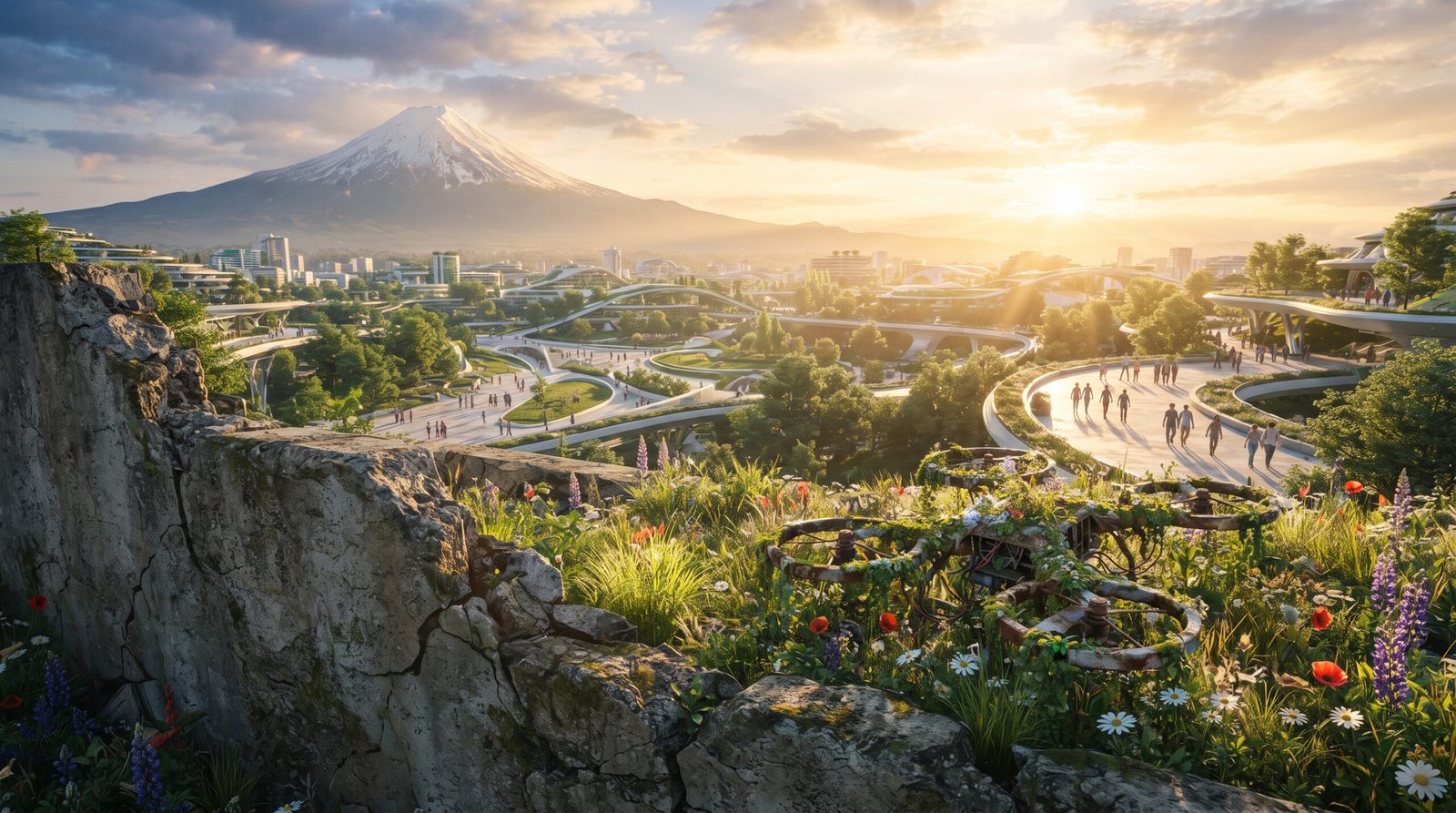
Not the Solution, but a Starting Point
on a Path towards a new Paradigm of Coexistence
A commentary to the article published by Felix Choussat: https://www.lesswrong.com/posts/bGoo3NWzMAzsLQceJ/drone-wmds-don-t-need-any-new-technology
summer grass…
the only remains
of the soldiers’ dreams
—Basho
When the United States Armed Forces invaded Panama, back in December 1989, their bombs targeted a military base at “El Chorrillo” popular neighborhood, in what they claimed had been a “surgical strike”. As it turned out, such surgical precision was akin to swapping the scalpel for a sledgehammer: by dawn, almost the totality of “El Chorrillo” old wooden houses were still in flames.
Was this apparent slip in precision because of lacking the proper technology, or else was it a deliberate decision to be sloppy and careless about human lives?
The Inevitability of Human Suffering, Destruction and Death?
If the definition of “terror” is quite clear, otherwise the way to designate the perpetrators may vary considerably, if it is some rogue organization or a State actor. Yet, the final consequences can be very similar, for the human beings under attack.
As the author of this formidable article, Felix Choussat, rightly warns:
➞ Drones are inherently simple, which makes it very difficult to control their proliferation.
➞ Drone swarms are a far more precise, controllable deterrent than other nonnuclear WMDs.
We are living in days of a “democratization of terror”, as the convergence of cheap visual mapping modules, small lithium batteries and miniaturized payloads, like micro-explosives or even deadly toxins, open the gates to a new era of extreme danger in which the manifestation of evil human desires can be greatly extended throughout both far more dangerous and far more accessible means.
Although it is easy to gain clarity and awareness about the ominous urgency of a most horrible ever-growing danger, an aspect about which everyone can easily agree, the perspective about possible solutions remains obscure, confusing and overshadowed by the ideology of slippery “political certainties”.
Mr. Felix Choussat proposes:
➞ It means asking ourselves what the logistics of putting nets and energy platforms over New York would be.
This proposal stems from a questionable originary premise:
➞ An attack using killer drone swarms will come from the outside of New York, not from within!
A premise which seems based on faith upon the Government, how it shall always aim exclusively to protect its own citizens. Always from the outside, never ever from within, as an always beneficial and benign Government couldn’t possibly ever be shown to have any relation whatsoever, with some very tall Towers 1 & 2 falling after an airplane crashed, or even a Building 7 falling down too in free-fall collapse…
➞ Cheap swarms of thousands, or even millions, of killer drones will eventually be universally available, in the same way that trench warfare was inevitable the day the British fielded the maxim gun for the first time.
In light of such tragic scenario, the social paradigm under which we still operate today, forces us to focus exclusively upon the inevitability of total war, uncontrollable human suffering, destruction and death.
Should we focus our efforts strictly on terms of engineering hopeful protective nets, hardening mass surveillance, and living in a permanent state of fear and sleepless wariness? Is it enough to stay alive, or is quality of life also important to take in consideration?
A crazy & absurdist new paradigm may save our quality of life?
➞ The cleanest city is not the one that is cleaned the most, but the one that is least dirtied.
- If I own ever more weapons, and refuse to talk to my neighbor, am I safer?
- If I own ever less weapons, and actively engage in talking to my neighbor, am I safer?
Let us imagine a new security paradigm based upon our efforts to improve coexistence. Maybe not as “the solution” already, but at least a starting point to discuss, envision, delineate a path towards a world where humans cooperate, help and protect each other.
➞ The safest city is not the one that is protected the most, but the one with fewer enemies.
Imagine a place in the human heart projected to human society, in which we the people organize to invest heavily in social coexistence rather than structural hostility.
The Global Peace Index (GPI), published annually by the Institute for Economics and Peace (IEP), alongside datasets from the United Nations Office on Drugs and Crime (UNODC), allow the exploration of countries that spend drastically less on traditional military power or maintain low-enforcement profiles.
This may lead us to discover the “Zero-Military Anomaly”, with Iceland as its greatest example. Iceland has consistently ranked as the #1 safest country in the world on the Global Peace Index for nearly two decades. It maintains no standing army, and its national police force is routinely unarmed (officers do not carry firearms on daily patrols). Yet, its violent crime and homicide rates remain among the lowest on Earth.
Countries occupying the top tiers of peacefulness and societal safety, such as Ireland, New Zealand, Switzerland, Slovenia, and Austria, all share specific structural traits. Although they do maintain defense forces, their per-capita expenditures on internal coercive enforcement are dwarfed by their investments in social cohesion. Their populations enjoy a high social welfare spending, high levels of institutional trust, low perceived corruption, and strong civic infrastructure.
Inverse correlation: the High Cost of Coercion
Cross-national crime studies consistently show that countries with hyper-inflated security apparatuses (such as high incarceration rates and heavily militarized internal policing) do not automatically enjoy lower crime rates; in many cases, extreme internal policing correlates with higher baseline societal friction, deep socioeconomic inequality, and systemic distrust.
When considering an upcoming scenario where cheap swarms of thousands, or even millions, of killer drones shall be universally available, one has to wonder how effective or otherwise futile may it be, if we simply ignore the root causes of conflict and violence, focusing instead upon ever maximizing surveillance and coercion. Will it even work?
The Inevitability of Peace!
Before, it was like: Let’s give Peace a chance…
Today, it is more like: Peace is our only chance!
The crazy idea of a new paradigm of coexistence in which we invest more in having fewer enemies instead of aiming to protect ourselves more from more enemies, isn’t it the stupidest thing you may have read in a long time?
A senseless utopia?
A hallucinated empty wish?
Well, let us evaluate the alternatives:
Can humanity even survive, if we do not shift our present premises towards a new paradigm of coexistence? Can we simply continue on this very same path, further tightening the screws of surveillance and coercion in hope this can protect us from ourselves?
If our present path, which strays further away from Peace, shall inevitably lead us to our utter destruction, then might we want to consider the possiblity of Peace a little less Utopian, maybe a bit more instead like our only viable path for the survival of our species on this planet?
When the democratization of terror makes absolute defense mathematically impossible, striving for peace ceases to be a soft-hearted philosophical luxury or a naive slogan. It becomes the ultimate, hard-headed prerequisite for biological survival.
Peace may be our only chance for survival.
Daniel Henry Thomas
CostaRi.ca