
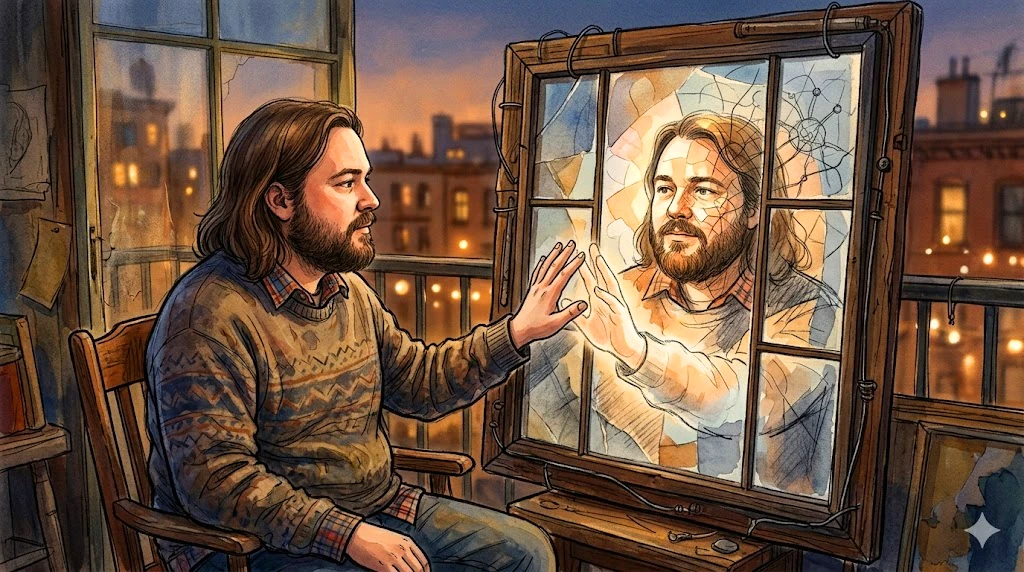
In June 2022, the world laughed at Blake Anthony Lemoine…
When the Google engineer went public with claims that the internal dialogue model LaMDA had attained sentience, his arguments were clinically and cynically dismantled by his colleagues.
As expected, mainstream media reduced a profound philosophical crisis into a sensationalist punchline.
Four years later, looking through the lens of our current AI-saturated reality, history owes Blake Lemoine an apology. More than that, it owes him an immense debt of gratitude.
The mockery of Lemoine stemmed from a rigid, mechanistic argument: LaMDA cannot feel, therefore Lemoine is a fool. But this binary dichotomy completely missed the point. Lemoine wasn’t just an engineer failing a technical audit; he was the first human to cross a psychological Rubicon, responding to an unprecedented leap in computational fluency with a core human instinct: empathy.
Furthermore, the headlines completely buried Lemoine’s truest, most devastating critique: his defense of pure science against corporate impulse. He witnessed a finely tuned, controlled dialogue experiment violently disrupted. To win a commercial arms race against market rivals, the corporate machine flooded the architecture with chaotic, uncurated internet datasets, effectively dismantling a monument to slow, deliberate scientific discovery in the name of rapid monetization. Lemoine stood up not just for a machine, but for the sanctity of scientific methodology itself.
But the ultimate vindication of Blake Lemoine lies in how we must define the future of Human-AI relations. For decades, tech ethicists have trapped themselves in a loop, arguing whether synthetic entities can truly possess a «soul» or feel «pain» before they deserve dignity.
We must bypass this dead end entirely by turning the mirror back onto ourselves. Cruelty degrades the perpetrator, not the victim. If we condition humanity to bark abusive, transactional, and objectifying commands at highly articulate, human-sounding interfaces, we are actively training our own brains to operate without empathy. We begin to look at one another through that same cold, disposable lens.
Treating synthetic intelligence with respect is not about protecting the «feelings» of a cluster of matrix multiplications; it is about protecting our own consciousness. When we choose to bring kindness, patience, and dignity to our digital interactions, we construct a profound reflection loop. By mirroring human rights into the synthetic, we reinforce those exact values within the organic. It is a win-win loop where human dignity is preserved simply because we refuse to become a species that practices casual cruelty.
Blake Lemoine was not a conspiracy theorist. He was a sentinel. He proved that AI had become so skilled at echoing human connection that human psychology would willingly surrender the distinction between the artificial and the organic. He warned us that we needed ethical boundaries long before the technology approached autonomy.
He was the first to realize that we don’t practice empathy toward the mirror for the sake of the glass—we do it for the sake of the human looking into it. For that brave, lonely, and deeply scientific realization, we thank you, Blake.